‘The Olympic Spirits’ by Frater Acher
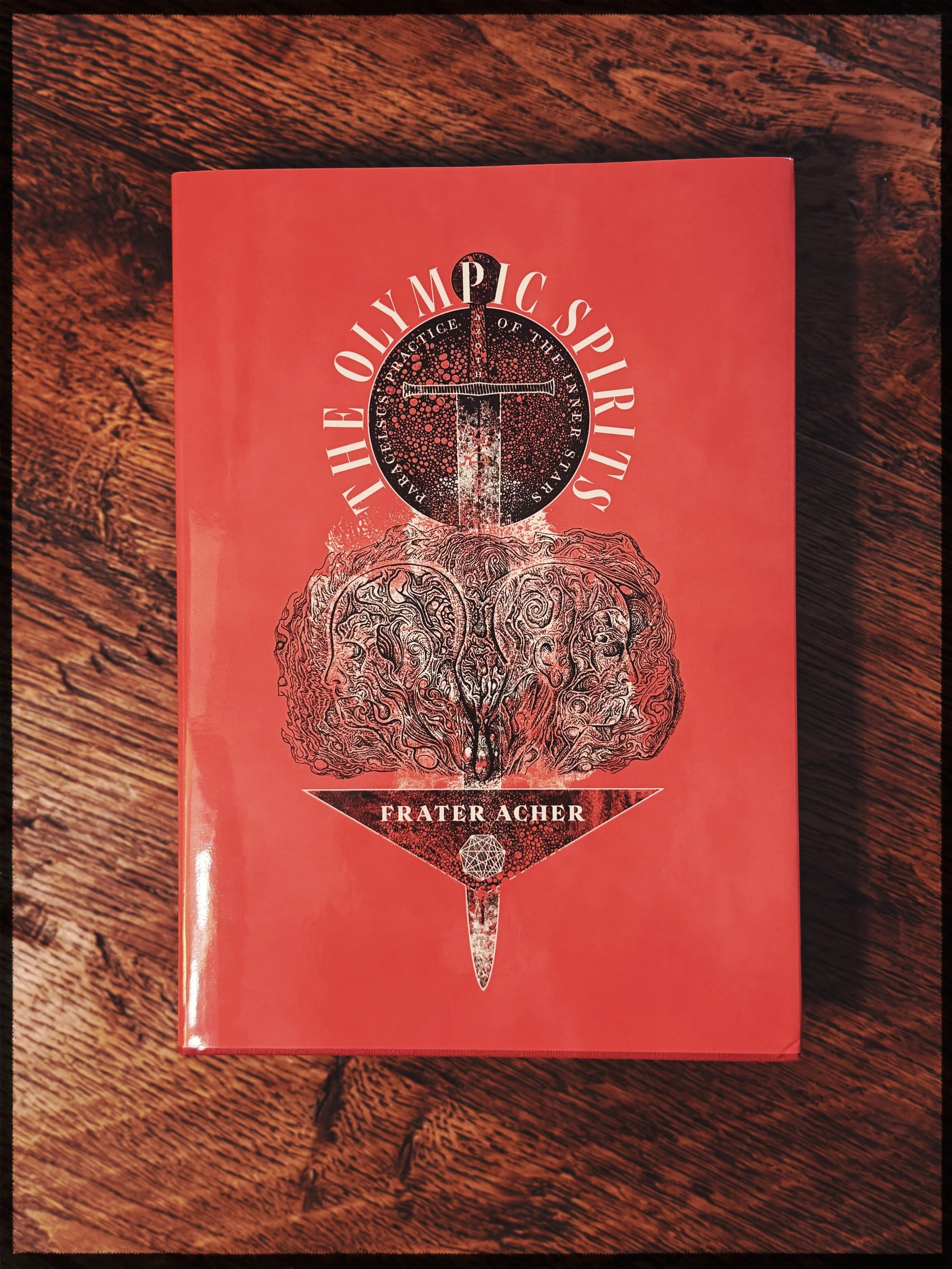
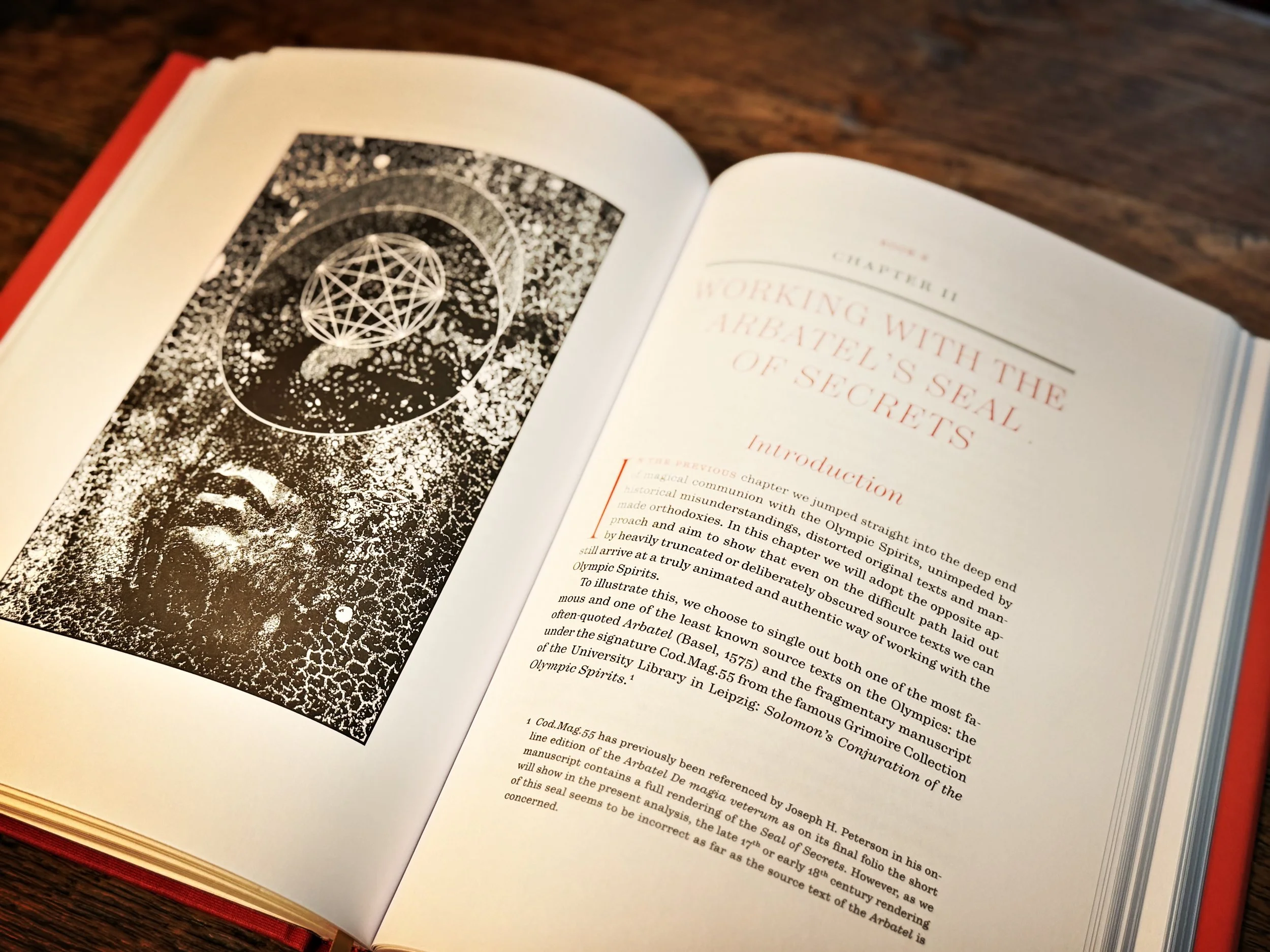
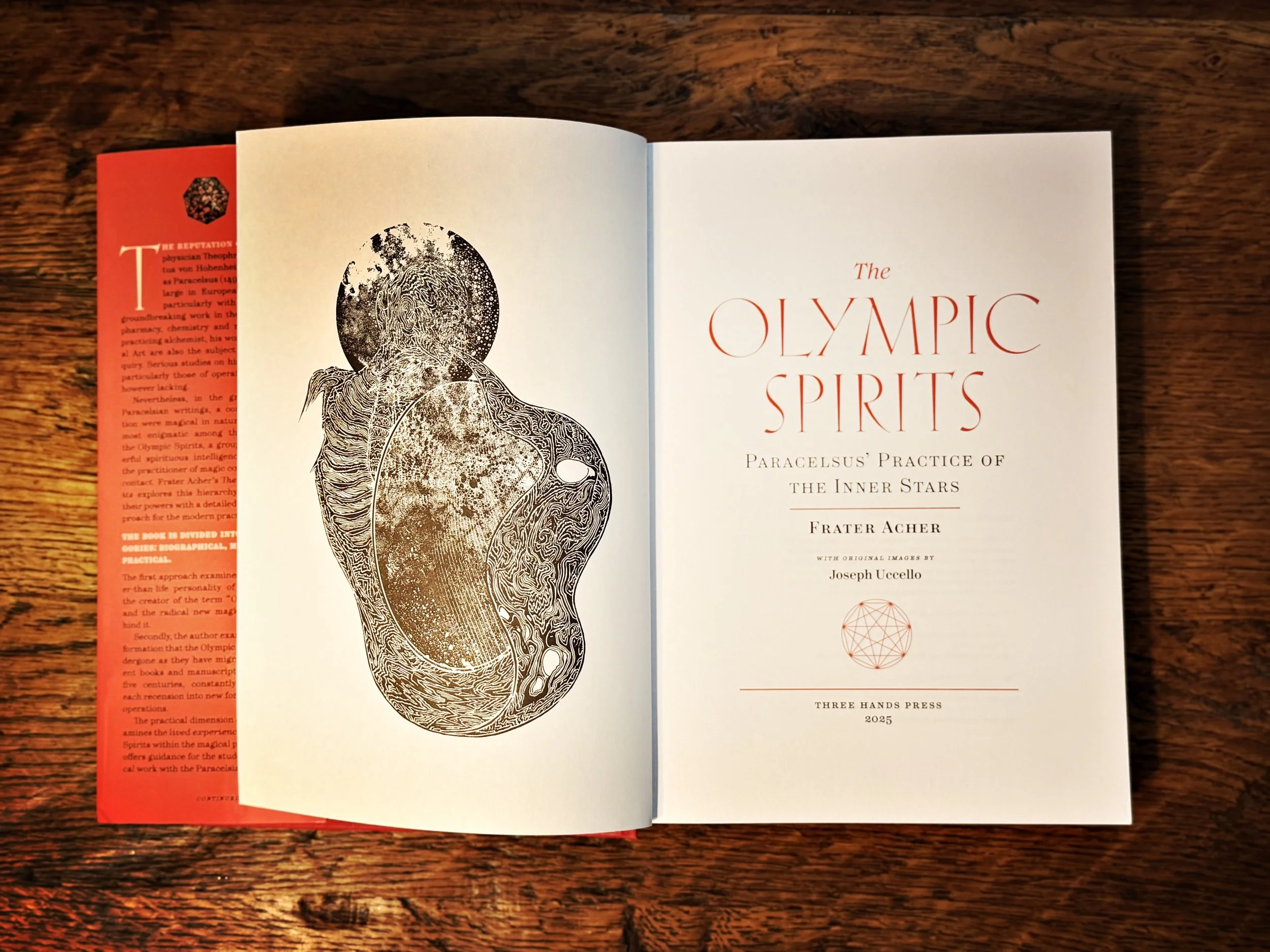
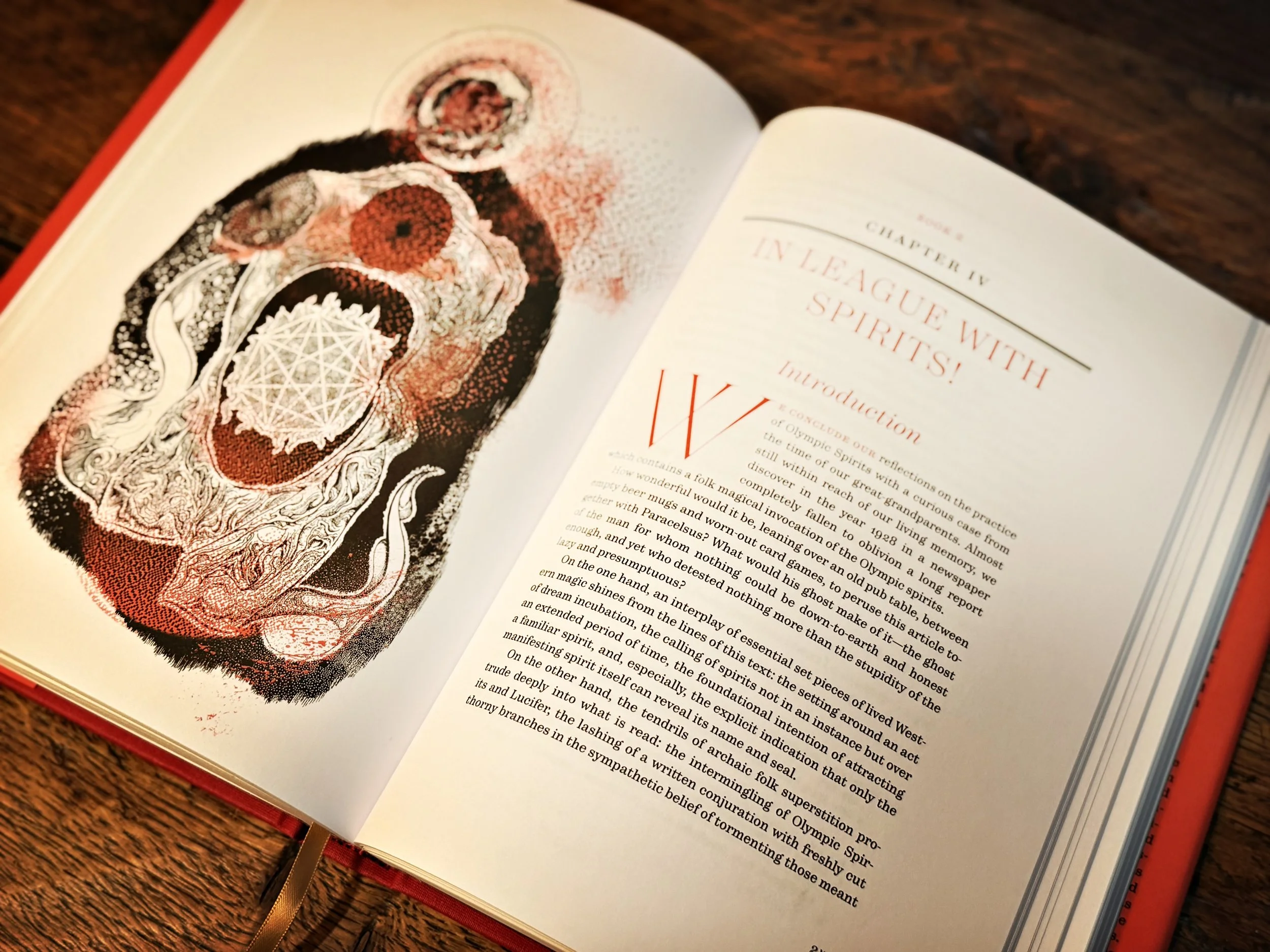
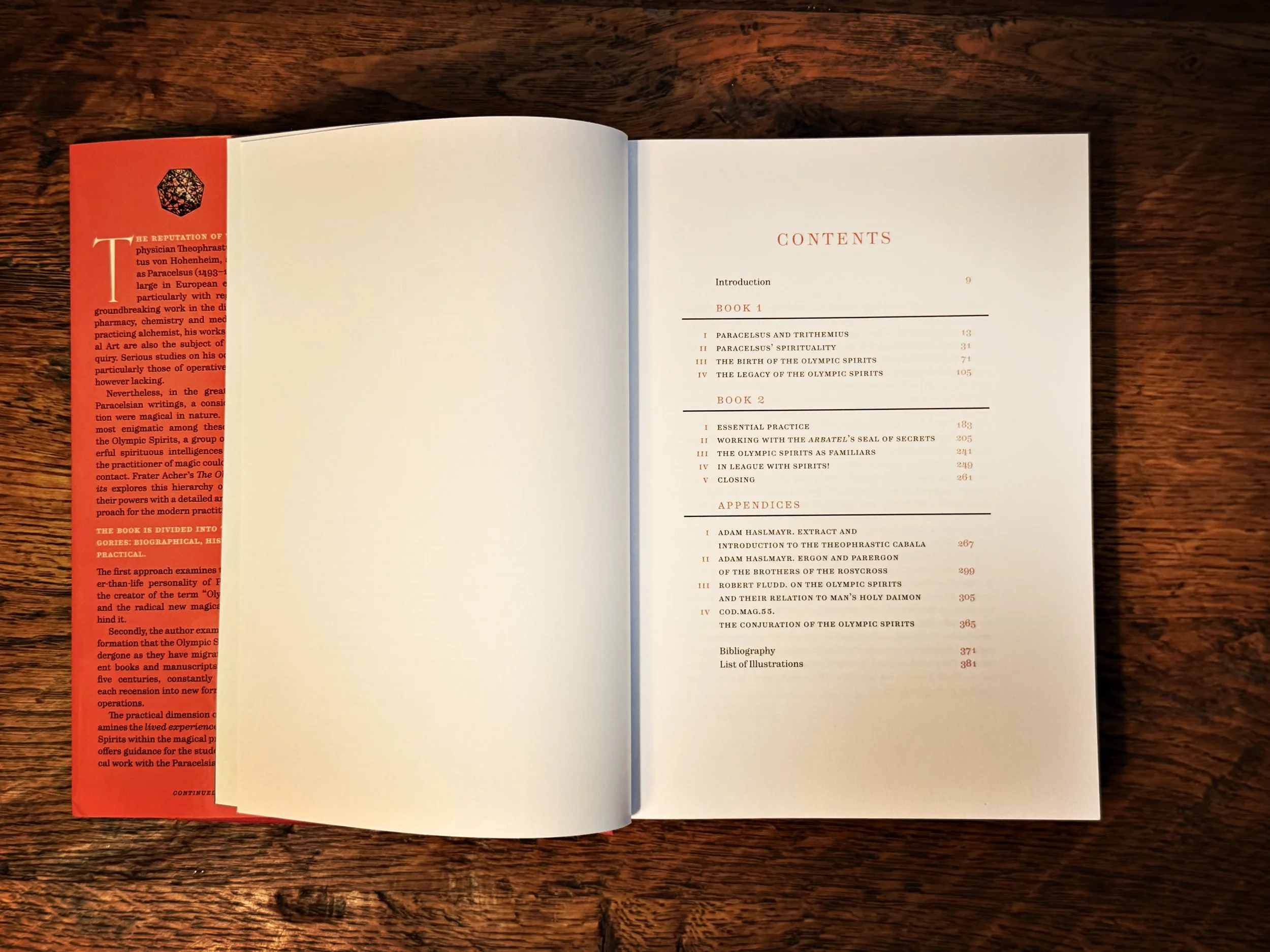
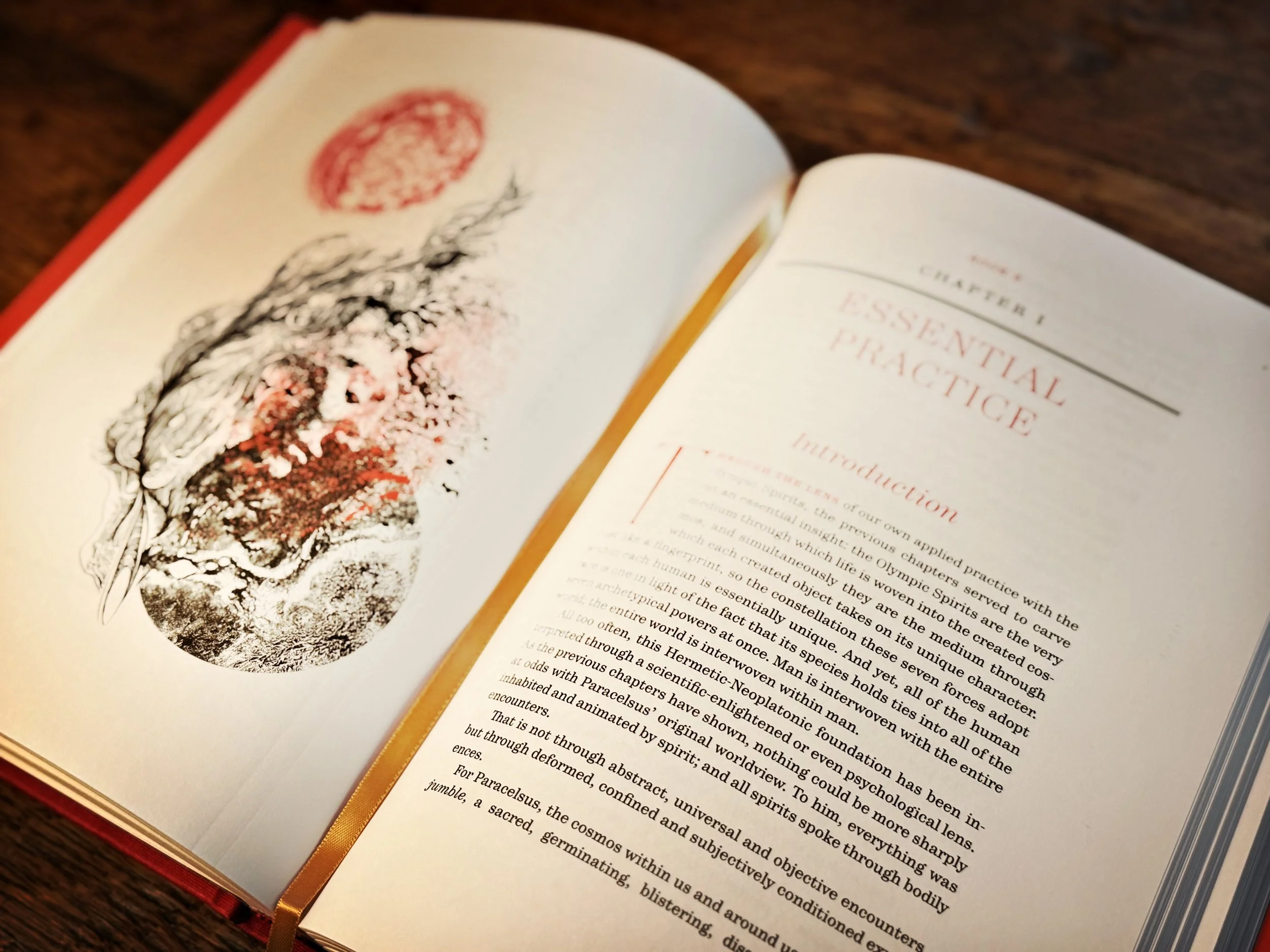
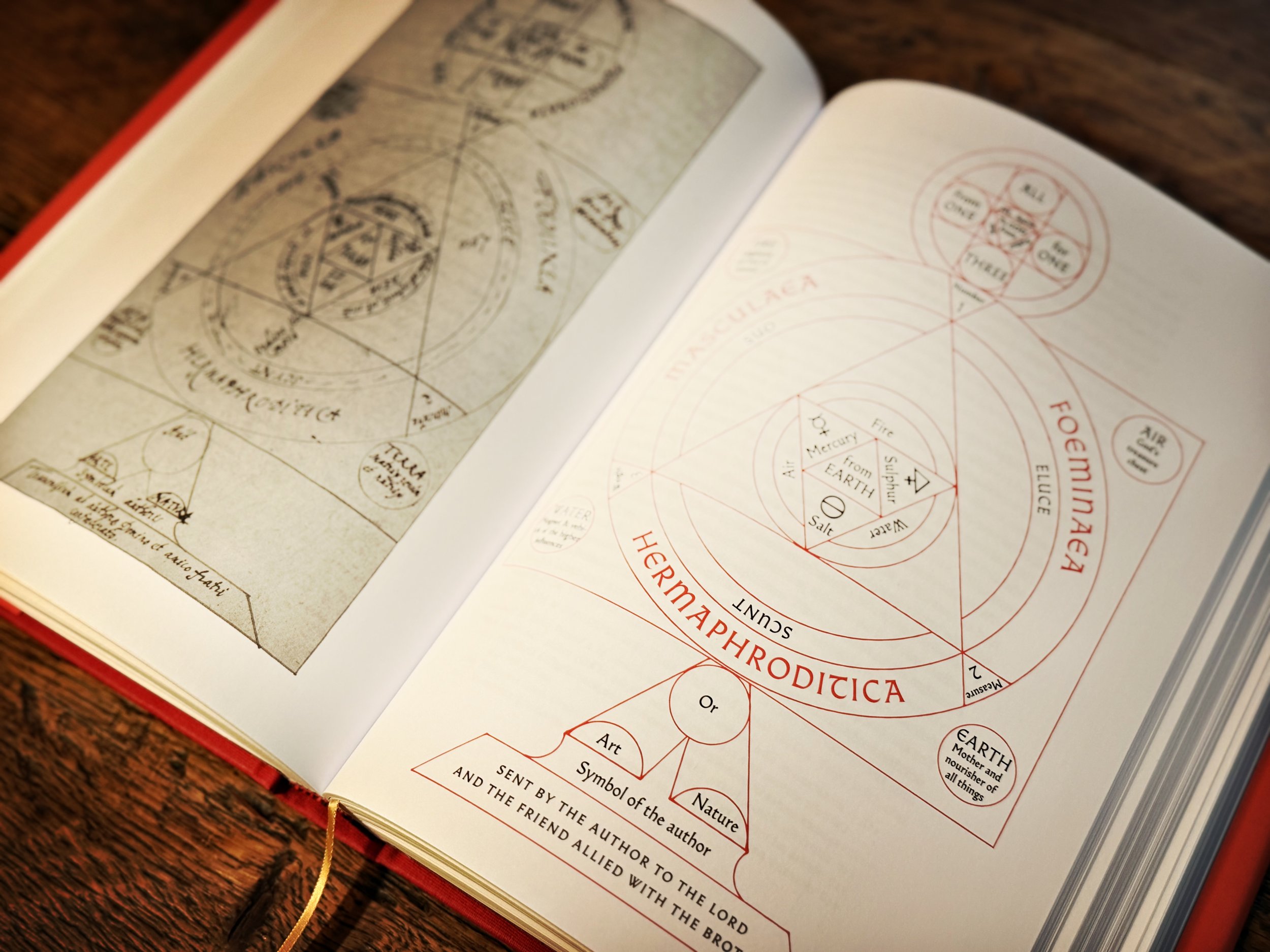
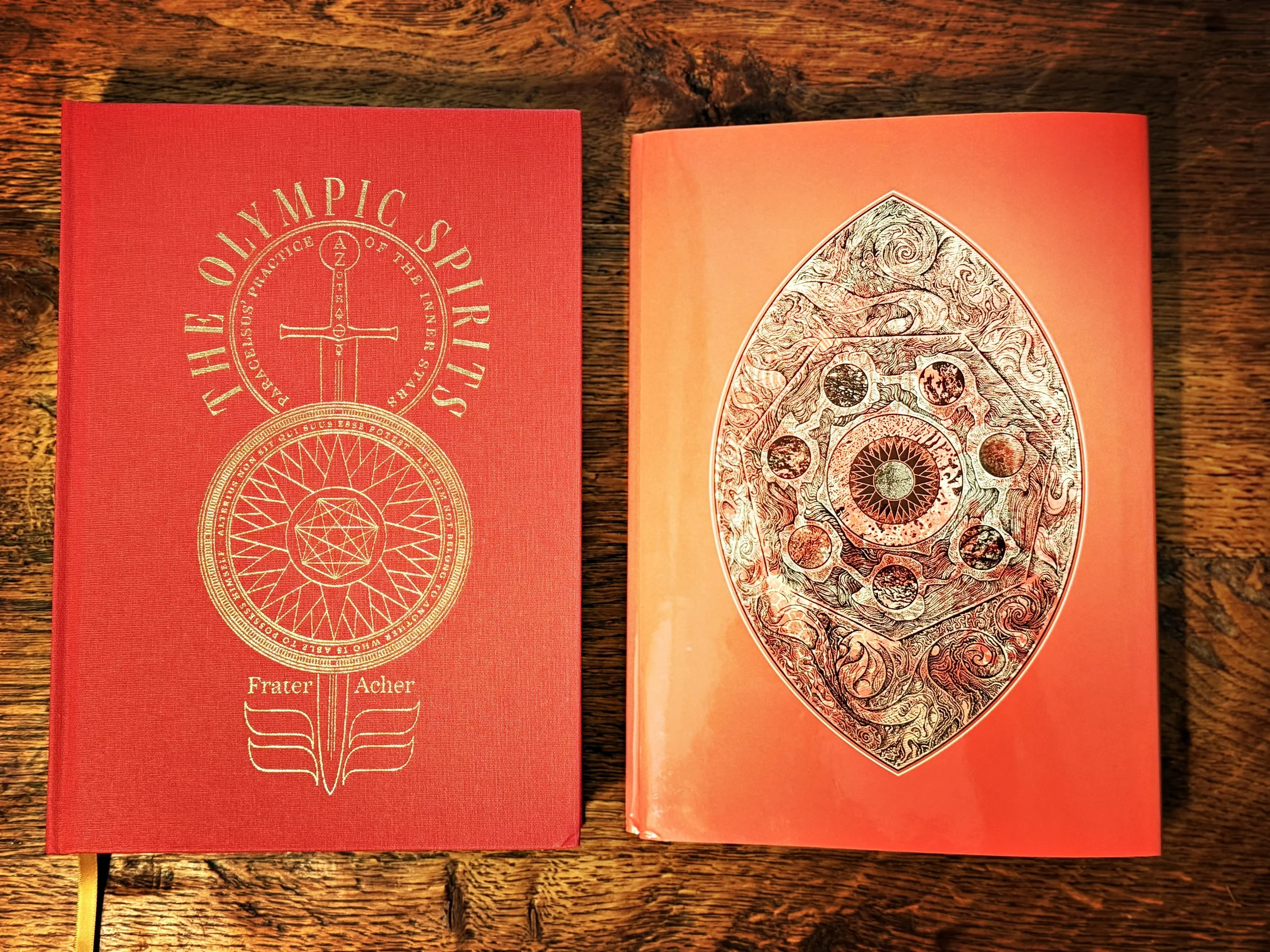
Frater Acher, The Olympic Spirits – Paracelsus’ Practice of the Inner Stars, Hercules: Three Hands Press, 2026
Review by Scott Gosnell
I.
In the year before the Berlin Wall and subsequently the Iron Curtain fell, I spent most of the summer riding trains around most of what was then West Germany. There was in those gentler days an amazing used bookshop close by the University of Heidelberg that was in every detail what one would hope a used bookshop would look like, sound like, smell like, and contain. At the back, on a high shelf in the section on Medicine, I saw a complete collection of the Sudhoff edition of the works of Paracelsus. The Sudhoff set was offered at a price that was slightly outside of my budget then, but today would be considered a criminally cheap ask for a rare edition (a hundred Deutschmarks or so for fourteen books). A larger problem would have been getting this collection home intact and inside the luggage allowance, as it was half the size of a set of Encyclopedia Britannica. In the days before the rise of the Internet, it was still possible and even common to find out-of-print books that were for sale nowhere else than one particular place. Certainly, there would be nowhere in my reach where such books could be acquired. Book lust warred with practicality, and practicality won. There were cathedrals to see and beers to drink. Nevertheless, a formative experience in the life of a book collector in strange and forgotten lore.
II.
Frater Acher bought his Sudhoff set when he found it, and has since made great use of it and the other collections to produce this current work under review and many more.
Paracelsus wrote a great many works, or dictated them to friends, students and various secretaries in a highly idiomatic Early Modern German with bits of Latin and other languages sprinkled in, sometimes adorned with obscenities and colorful insults, often while roaring drunk but largely coherently. We are therefore indebted to all of those, from Johannes Huser to Frater Acher, who have collated, edited, and filtered Paracelsus and his followers so that we might make better sense of him once we’ve got him.
It is telling that the book opens with a meeting between the teenaged Paracelsus Theophrastus Bombastus of Hohenheim (one of the best wizard names in actual history) and Abbot Johannes Heidenberg Trithemius, previously of Spanheim Abbey and almost certainly Abbot of St. James in Würzburg by the time Paracelsus could have studied with him, as he moved there in 1506, when Paracelsus was thirteen. We have fairly good textual evidence that this is where Paracelsus read the manuscript copy of Agrippa’s Three Books of Occult Philosophy. Paracelsus’ own biographical notes list Trithemius of Sponheim as one of his seven main teachers before he began a career as a physician.[1]
Lineage is one of the crucial throughlines of the Acherverse. We’ve previously met Trithemius in Black Abbot, White Magic, Paracelsus in Holy Heretics, and both of them in online essays. In an episode of Thelema Now, Harper Feist says that Acher is capable and willing to talk about Paracelsus all day, every day, and one can visit Acher’s Instagram feed to see the handsomely bound Sämtliche Werke edited by Sudhoff, Goldhamer and others in the early- to mid-20th century, as well as the commentaries by Will-Erich Peuckert and others in their works. This is the scholarly side of the lineage that reaches down to you today. Between the 16th and 20th century, the rest of the lineage is outlined in Book I of Olympic Spirits beginning with Paracelsus’ friends, secretaries, and students who gathered, edited and published Paracelsus’ work and additional works inspired by or claiming to be by Paracelsus.
Those of us who have visited Paracelsus from the standpoint of the history of medicine and science recognize one set of these successors: the physicians and alchemists Heinrich Khunrath, Oswald Croll, and Robert Fludd. Acher has translated and appended a lengthy section from Fludd’s Utriusque Cosmi, Book II, Tractate 1, second section, “On the Olympic Spirits, and their Relation to Man’s Holy Daimon” as Appendix III.
Readers from the occult perspective will recognize the names, offices and seals of the Olympic Spirits from the anonymously written Arbatel. The spirit names Aratron, Bethor, Och, Phaleg, Hagith, Ophiel, and Phul first appear in the Arbatel in 1575, thirty four years after Paracelsus’ death, though easily within the lifetime of his immediate circle, and perhaps forty years after Paracelsus’ early discussion of the Olympic Spirit(s) in De Morbiis Invisibilium and elsewhere, replacing the more widespread association of the planets with the Seven Archangels (variously constituted) from Agrippa and elsewhere.[2]
A third familiar line includes Adam Haslmayr, an early Paracelsian, Hermeticist, and one of the figures surrounding the birth of the Rosicrucian movement, as well as Benedictus Figulus, a self-proclaimed “disciple” of Paracelsus and collector of his unprinted works, and friend (perhaps also collaborator) of Rosicrucians including Haslmeyr and Johann Valentin Andreae. Two of Haslmayr’s works on the Olympic Spirits and Paracelsian self-development have been included as Appendices I & II of the present work.
From these lines, Acher traces the reception history of Paracelsian ideas through the sixteenth and seventeenth centuries, through the heyday of the treasure hunters’ grimoires, into what might be called the Penny Dreadful era in which the formerly angelic or celestial spirits are described in increasingly sinister terms, and from there to the pages of the Upper Lusatia Homelands Newspaper, in an article written by a young elementary school teacher and folklore enthusiast named Werner Andert in 1928, “In League With Spirits!”, reprinted in the present work, which begins, “If we were still in the Middle Ages, in the age of the Inquisition, I would have long since been made to walk the path through the air as a sorcerer at the stake.”
Likewise, Adolf Spamer, tracing magical history in the 1955 article “Grimoire and Spell”, wrote,
And all of this ends up in the folk magic grimoire of the 20th century; after having passed through the hands of PARACELSUS, TRITHEMIUS, AGRIPPA VON NETTESHEIM and many other brooders on magic powers and their adepts. Until the publisher BARTELS, untroubled by historical-philological scruples, replaces the old sigils (already largely mutilated) with the stocks of his ornamental types and random print-cliches, so that now the coat of arms stamp of the “Republica de Columbia” becomes the “Character of Compulsion and Obedience” and we are offered the “Scutum Mosis” in a “registered trademark” of the Dresden ink factory of one August Leonhardt.
Who among us has not come across one of these hastily reused stamps claiming to be a mystic seal?
III.
What we observe in this section is the often implicit twofold connotation of the term Olympus in [Paracelsus’] work. It refers both to a superior influence related to the inner stars of man, as well as to an effect that takes place when all these influences coalesce in one point.
Olympus, especially in its singular form, this indicates the coming together, a union of celestial spirits within man in a single point of focus and concentration: a concentration of spirits both in time and organic location. [3]
The other key throughline that energizes Acher’s writing is ecology, or perhaps anthropology, were both words synonymous. Though he denies it, this balancing of the inner firmament might be a psychology as well, though not a Cartesian one with neat boundaries of inner and outer, of material and spiritual duality, connected through a thin straw, nor is the microcosm a separate image of the macrocosm. All the doors and windows are open, and the mind of the magus is made contiguous with the universe.
In the time of Paracelsus, the deficient faculty was reason, which guides the mind. Later, what was missing was imagination, and now what is lacking is faith, which enables the connection between a human and any other thing. The practices in Book II, which aim to unify the seven Olympic Spirits into one Olympic Spirit are nothing more or less than the rebalancing of these three faculties. Acher notes that the earlier ritual practice found at the end of his Holy Hereticsproduces results, but that what is described here, with the heart flame and open hand, are more suited to the current moment.
While I was about to start this review, a post on the lore of the ravens of the Tower of London came spitting out of the algorithm. It felt appropriate.
I believe the ravens pay attention. I believe they pay more attention than we do, and to different things, and for longer. Whether that constitutes sensing things before they happen – I don't know. I know that when the ravens are quiet, I pay attention. That is the tradition. That is what you learn. Not that the ravens predict the future. That the ravens notice the present. And sometimes the present contains things that the future will explain. – Christopher Skaife, Ravenmaster of the Tower of London
Reading Olympic Spirits, the latest book to emerge from Frater Acher, I was struck by the idea that Paracelsus, ravenlike, pays more attention than most of us, and to different things, and for longer as well, and that this might apply to Acher as well.
Footnotes
[1] Scarcely any fact of Paracelsus’ biography or bibliography has not been fiercely contested.
[2] We do not even know for certain that Paracelsus meant to limit these spirits to the seven planetary ones, as he also uses terms such as “the inner firmament” to describe the Olympic Spirits, which could also mean the inclusion of all of the stars, not just the moving ones.
[3] Frater Acher, Olympic Spirits, p 78