‘Freemasonry in the Haitian Imaginary’ by Leah Gordon & Dr. Katherine Smith (eds.)
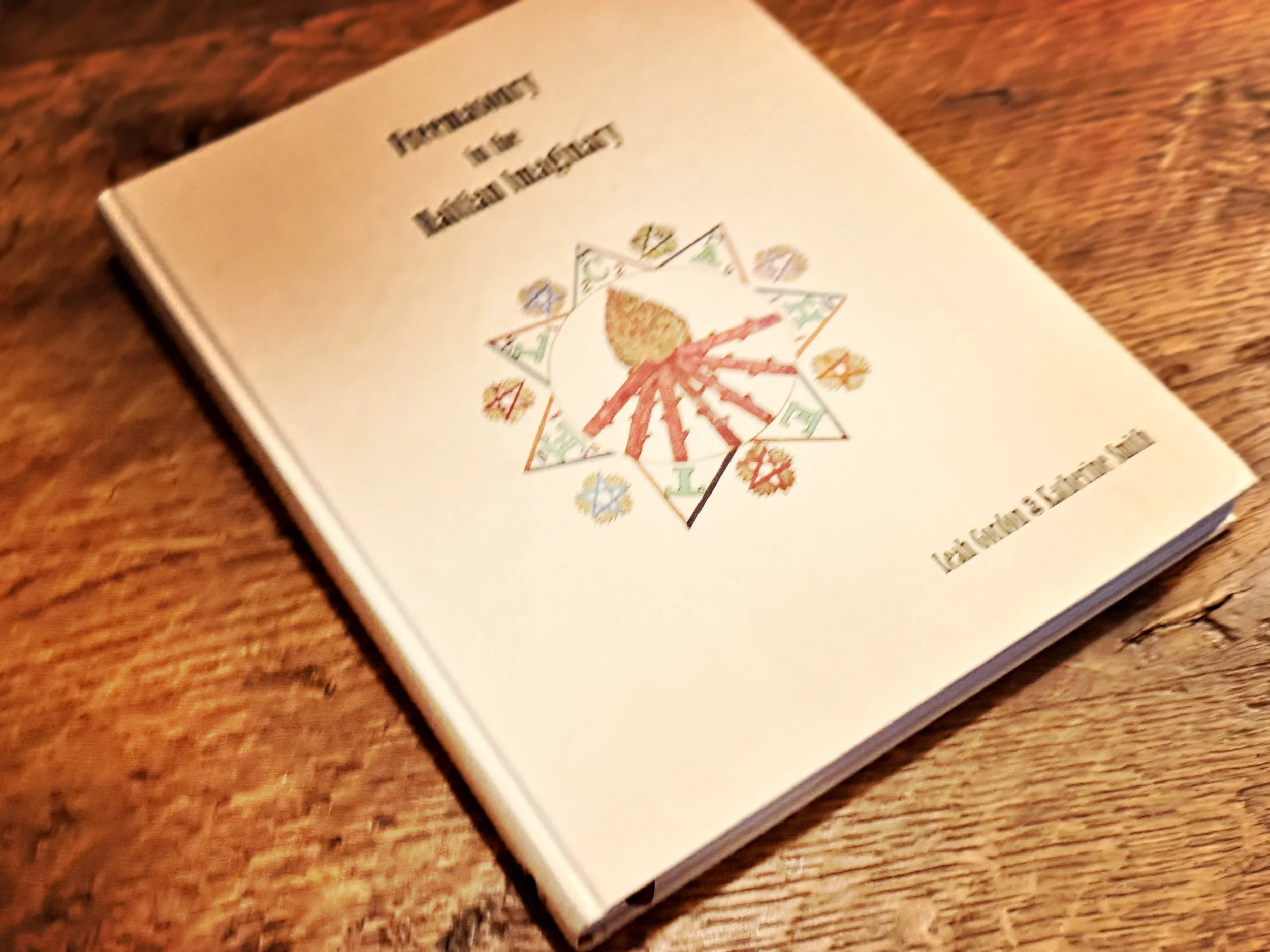
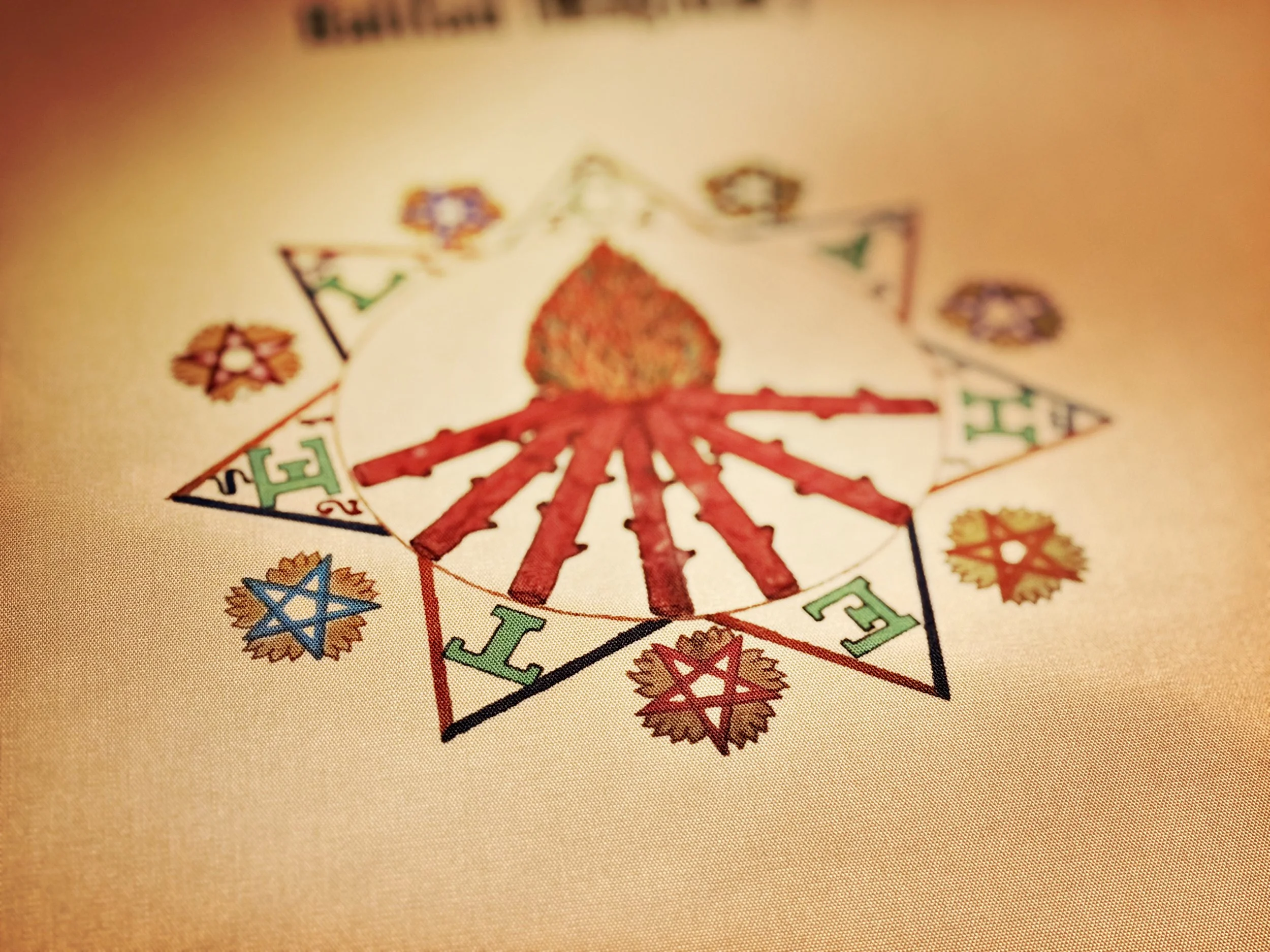
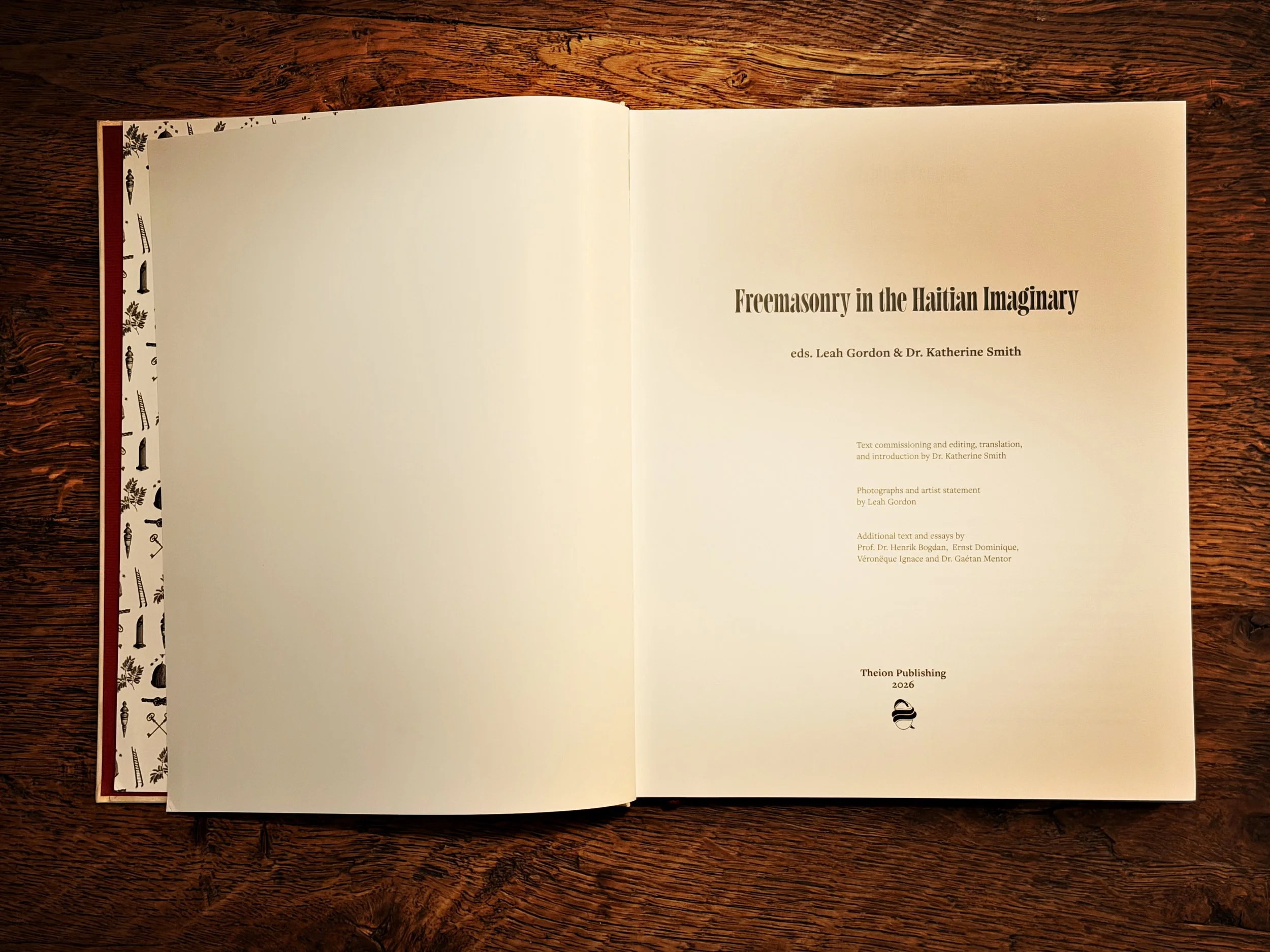
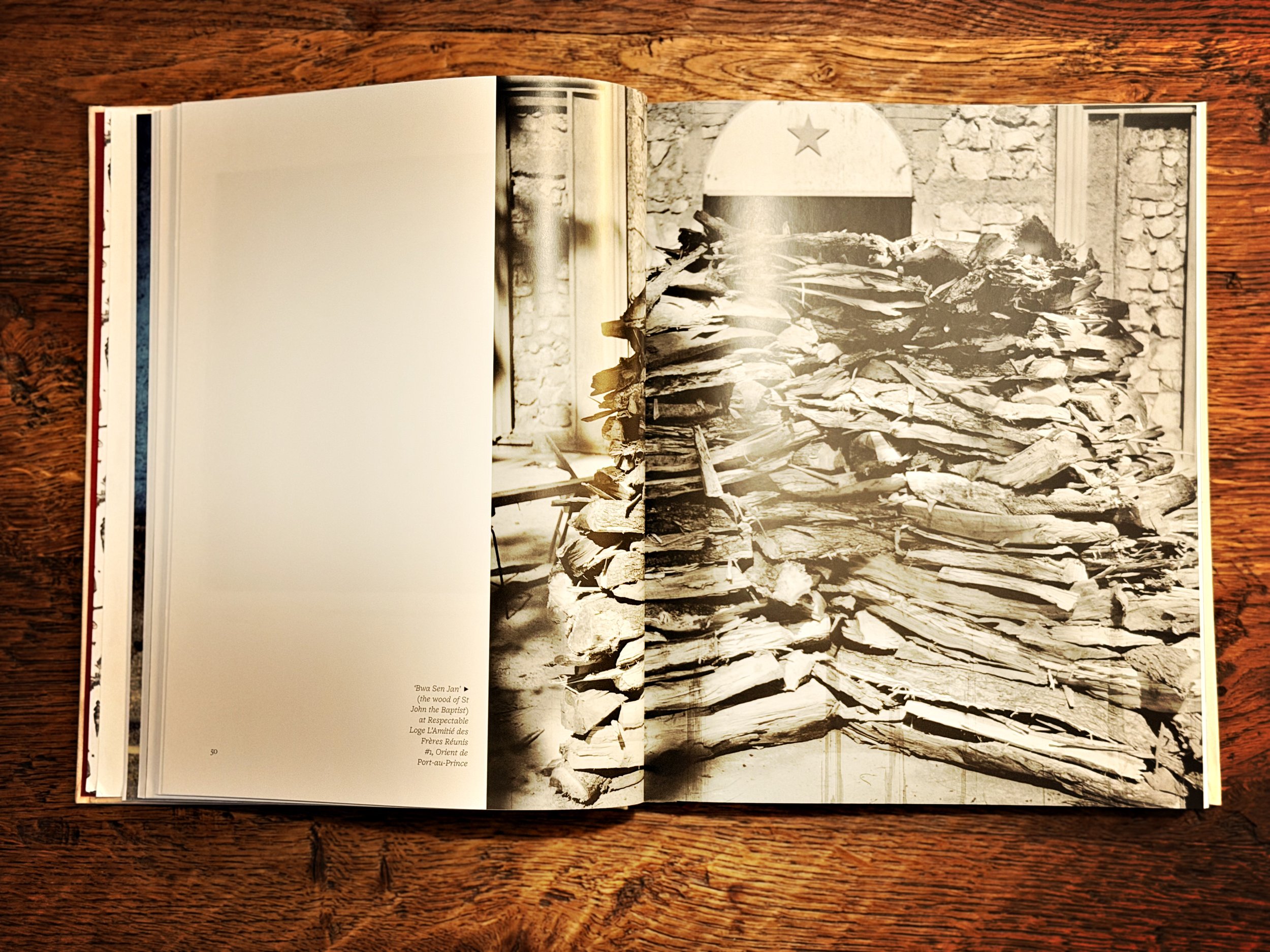
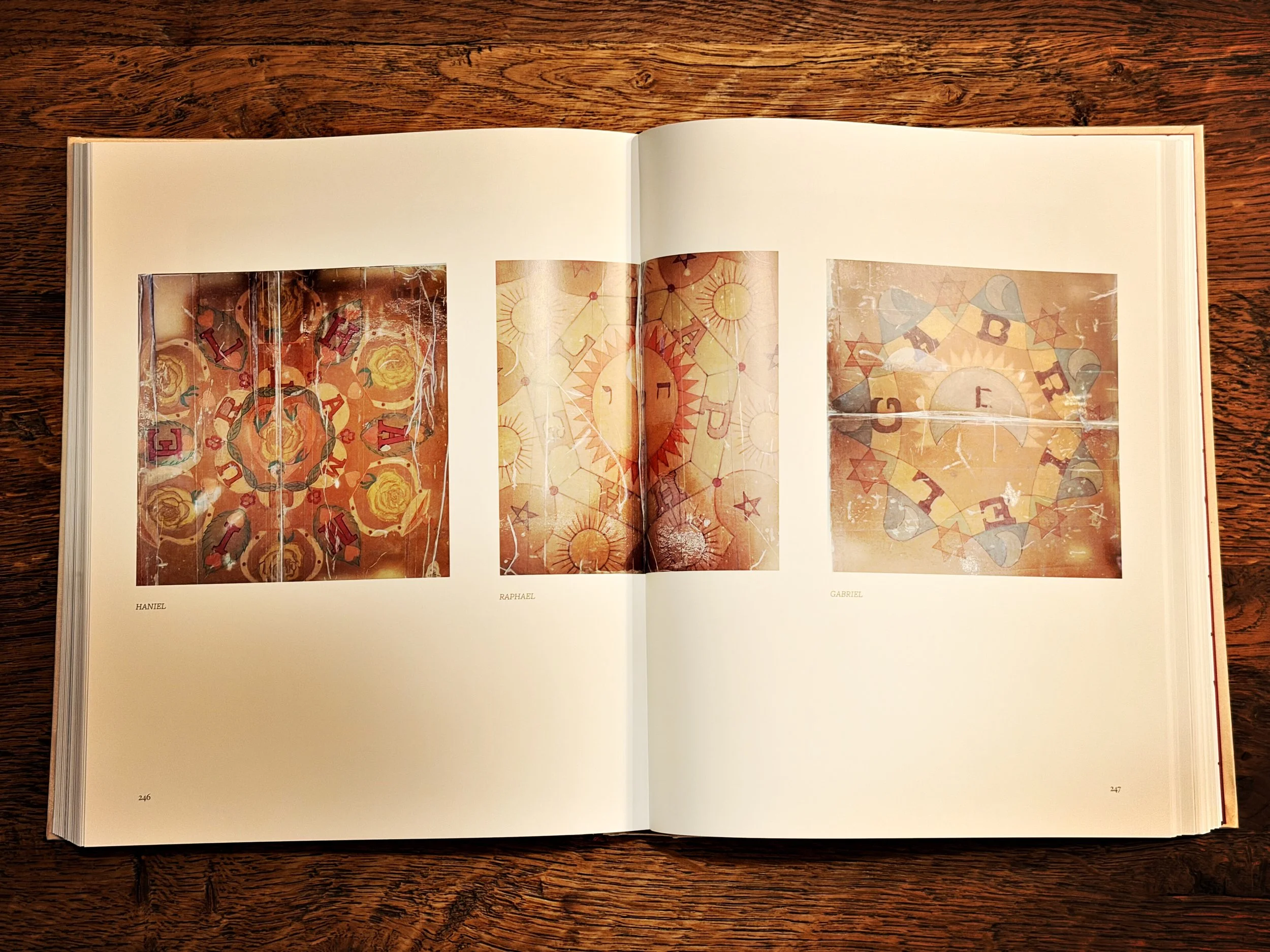

Leah Gordon & Dr. Katherine Smith (eds.), Freemasonry in the Haitian Imaginary, Munich: Theion Publishing, 2026
Review by Peter Mark Adams
Overview
I find unexpected couplings throughout her images: mysticism and civil society; secrecy and spectacle; solemnity and celebration; patriarchy and grace. – Katherine Smith (p.13)
Freemasonry in the Haitian Imaginary is a beautifully wrought, sumptuous and important work. It combines a photo essay by noted photographer Leah Gordon with three short essays evincing ever deeper levels of engagement with Haiti’s Vodou-inflected, magically-inclined Masonic movements. The diverse voices and images that constitute this work have been curated and organised by art historian and ethnographer Dr. Katherine Smith, a specialist in Haitian and Caribbean art who, along with Leah Gordon, acted as the project’s overall editor.
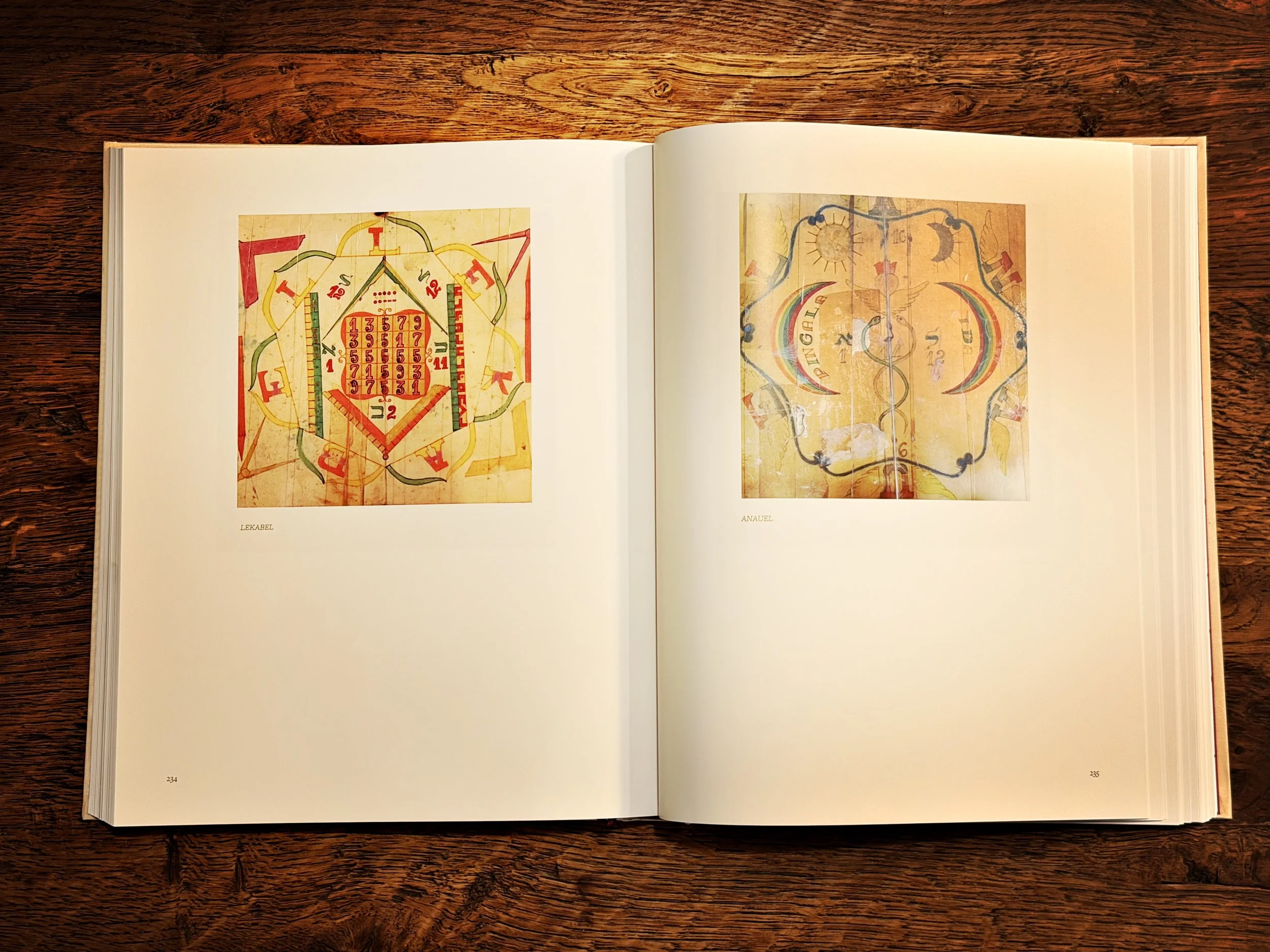
The book is large (at some 24 x 30 cm) and utilises premium paper to render high quality reproductions of Leah Gordon’s photographic work; which provides both a beautiful and compelling vision of a hidden, indeed largely secret, world. Gordon’s photographic work, utilising a vintage Rolleiflex camera, possesses a distinctive tonal richness that powerfully conveys the lived reality of her subjects’ lives. Her creative vision bestows a culturally sensitive and esoterically attuned inflection to the lens; one that admirably captures the essence of its ethnographically dense subject matter in some 150, full page, black-and-white and colour photographs. These images consume fully half of the book’s 320 pages and are distributed throughout to provide a rich visual commentary on the practitioner narratives and testimonies.
Gordon is known for her politically committed exploration of the historical and political realities besetting the “majority class” (a phrase possessed of much greater inclusivity than the more usual, culturally bound, “working class”). Her most notable projects include: Kanaval, a twenty-year long project (comprising photographs, a documentary and oral testimonies) relating to the Haitian Mardi Gras. Gordon captures the unique way in which it has evolved to serve as a vehicle for the grassroots of society to take “history into their own hands” (Note 1 below) to radically re-interpret “official” historical and political narratives into forms that directly express the majority class’s point of view through the medium of masquerade. Another ongoing project, Monument to the Vanquished, focuses on the continuing issues relating to social justice, land ownership and access arising from the manifest injustice of England’s eighteenth century Enclosure Acts.
For the current project, Gordon has joined with Dr. Katherine Smith to explore the magically-imbued world of Haitian Freemasonry both artistically and emically; with high level practitioner accounts covering the movement’s origins, traditions, ritual practices as well as the phenomenology of participation in its densely esoteric surreality. From these accounts we obtain a clear sense of the dignity and manifest sense of agency that this system of ethically-guided practice bestows upon its immediate community as well as upon society at large.
Katherine Smith’s wide-ranging and absorbing Introduction is followed by three chapters in which noted authorities offer a progressively deeper immersion into Haitian Freemasonry. Each of these chapters is accompanied by Leah Gordon’s distinctive images (organised into sections under such categories as Lodges, Portraits, Pharmacies, Pentacles, Cemeteries, and Tracing Boards) that greatly amplify the impact of the writing by grounding it in an intensely realised visuality. The book concludes with a valuable Artist’s Statement by Leah Gordon.
Chapter Outlines
In her Introduction, Smith warns us against reading the phrase “Haitian imaginary” as a reference to something “unreal”; rather than to the, “shared set of values and myths of a social group bound together by collective imagining.” (p. 14). Smith explores the power of Masonry’s shared symbolic language in enabling the movement to achieve global reach, integrate emerging societal mores and facilitate the kinds of positive societal transformation that we see exemplified by Haitian Freemasonry. Under the influence of Masonry’s ethical values, Haitian society was empowered to emerge from plantation-based slavery and, by conducting the first successful anti-colonial war of liberation of the modern era, to become the first free Black country. Smith explores how Enlightenment values merged with such esoteric currents as Mesmerism, Martinism and Vodou to constitute the fabric of “Haitian Freemasonry” whose esoteric dimension she captures in the apposite phrase “enlightenment from below” (p. 14). The personal testimonies recorded as part of Smith’s ethnographic fieldwork describe how the disciplinary regime of Masonry has worked for over two hundred years to consolidate each generation’s sense of identity and dignity in the face of Haiti’s continuing problems; it is precisely this quality that we see so clearly reflected in the faces, posture and dress of Gordon’s subjects.
Chapter one, Freemasonry: A Secret Tradition with a Global Story, by Dr Henrik Bogdan, provides an exemplary introduction to the world of Freemasonry covering its lodge system, degrees, symbolism, ritual and visual culture. Bogdan reflects on how “Its symbolic framework – rooted in ideas of universal brotherhood, moral progress, and the search for truth – was flexible enough to accommodate a wide array of cultural, political, and religious perspectives.” (p. 62). He highlights how this foundation facilitated the emergence of a number of appendant bodies encompassing various spiritual perspectives and offering a variety of systems of higher degrees. This historical background is foundational to understanding the movement’s evolution within colonial contexts. Bogdan discusses how, on different continents, it served to both quicken the process of social reform and support the emergence of anti-colonial liberation movements – thus contributing to the emergence of a “postcolonial civic identity in many parts of the region.” (p. 62).
In chapter two, Black Janus — Or: the Dual Aspect of the Haitian Rite of Freemasonry History and Esotericism, Dr. Gaétan Mentor, a senior Haitian Freemason, historian and author, provides a detailed history of Haitian Freemasonry as it evolved through the twists and turns of the island’s history. This section features original Order documentation and photographs of its foundational figures. Mentor also addresses the Order’s practices and in particular provides a fascinating account of its progressive “Creolization” describing how “The original humanist mission of Freemasonry – focused on reason, brotherhood, and virtue – gradually receded, as healing, protection, and pragmatic spiritual power came to the fore.” (p. 134). Despite the fact that both Freemasonry and Vodou, “emphasize community and fraternal bonds” (p. 139) the relationship between them is far more nuanced.
In spaking of Freemasonry and syncretism, it is also important to delineate which Vodou and whose Vodou is being referenced, as Vodou varies tremendously between regions and communities. (p.139).
Mentor underlines the fact that in Haitian Freemasonry a section of their routine meetings is always dedicated to, “their brothers’ needs for protection (mèt ko veye ko), prosperity, and health” which are attended to in an atmosphere of song and dense incense employing “Vodou, Kabbalah, mystical squares, and pentagrams and hexagrams of light [that] […] attract the presence of angels […]” (p. 140).
In his Conclusion Mentor asks: “Is not Janus the god of beginnings and endings? An English beginning and a Haitian ending?” (p. 146). Evidently this metaphor of Haitian Freemasonry’s Janus-like nature possesses traction; for in a photo illustrating Katherine Smith's Introduction, a Haitian Karnaval reveller is seen wearing a Janus face mask with Masonic symbols (p. 19). Haitian Freemasonry possesses both an institutional face (as the vehicle of universal Masonic protocols and practices), and a practical one (rooted in the ancestral beliefs and magical practices of Vodou). In addition, it evolved from being the preserve of a colonial elite to the organisational and ideological fount of liberation movements. Mentor states that “The ‘creolization’ of English Freemasonry may be seen as a form of Haitian reappropriation, even a kind of revenge – a symbolic destigmatization or second dechoukaj (the first being Toussaint Louverture’s revolution in 1794). It is the appropriation of a system once forbidden to the ancestors of Haiti’s Black population, denied to them as ‘unworthy’ or insufficiently ‘titled’ to participate.” (p. 146). And hence, he concludes, does it not constitute “An English defeat? A Haitian victory?” (p. 146).
For Chapter three, Interviews with Ernst Dominique—a Collage, Katherine Smith has collated her conversations, conducted over the course of almost ten years, with Ernst Dominique (1956-2020), a senior Mason and psychic. The result is a “thought collage” of his key ideas and beliefs that allows us to glimpse something of the inner life of an esoteric practitioner predicated on devotional acts: “When you search for the divine, you are praying all the time. A Mason lives by prayer.” (p. 210) Dominique describes himself as, “more on the mystical and spiritual plane because Freemasonry is an institution which has a direct rapport with the living forces of the cosmos.” (p. 210); and it is, indeed, to this plane that most of Dominique’s discourse pertains. One of Dominique’s primary ways of working is with the esoteric Kabbalah (a gentile system extrapolated from Jewish religious mysticism during the Renaissance) upon which he draws heavily to structure and guide his visionary interactions. “Symbols make Freemasonry mystical because God is a geometer. When you see a Mason working, he is always drawing different figures. […] You put the pentacle (pontak) in motion. You put it in contact with superior planes on high. When you make a ceremony like that the force (fòs) descends, you attract power. That power is the power of God. The pentacle is a symbol of great intelligence, it’s a symbol of great intelligibility that allows man to discern the vestiges of true spirituality” (p. 210-211).
One set of otherworldly entities with which he works are the seventy-two Kabbalistic “jeni” (i.e. “angels” or spiritual principles) with whom he establishes contact and then consolidates his relationship by preparing talismans (“pontak” or pentacles) uniquely designed utilising sacred geometry, sacred names and their corresponding colour schemes. These instruments are then used to invoke their corresponding divine powers in order to affect healing and protection. An extensive collection of them is depicted in full colour. In parallel, Dominique acknowledges the Vodou deities, or lwa, as paralleling the jin but operating on a more earthy plane: “For example, in Vodou you will see the spirits of the earth making trees grow to feed us – Minister Zaka is the lwa (Vodou spirit) who makes trees grow, but Zaka is an eskòt (mystical intermediary) for God. There are many of them. These spirits are also called nyom (gnomes)” (p. 213). Dominique’s relationship with the spirits is not all one-way, he also feels himself to be under their guidance, “[…] the word of the jeni can compel me to make the pentacle, because it speaks of ‘the strait gate’. It speaks of thresholds. It’s the word of the jeni that I converted into an image. You have to go through this door, yes, but to go through this door that the jeni opens for you, you have to pray to him a lot, you have to put yourself in a condition to receive the vibrations of the jeni. And in your sleep he will tell you all sorts of things. In your sleep they can guide you to heal” (p. 214). Finally, Dominique embraces a distinctive eschatological vision:
Each civilization has its own ways. Actually, this civilization is almost gone […] It is time for this civilization to go so that another civilization can appear. And, the civilization that will come will be stronger than us. (p. 217)
The final section is devoted to an Artist Statement by Leah Gordon that reprises her artistic motivation as disrupting “that minimal set of visual tropes that the Western gaze sought out including, abject poverty, eye-rolling possession during Vodou, and military/street violence […] to the detriment of the agency of the Haitian people” (p. 271). In reaction, the subject of Haitian Freemasonry, “allowed me to create portraits of poised people from the majority class who were smartly dressed and in possession of their appearance” (p. 271).
Another dimension of Gordon’s work is her attraction to “Mystical symbolism, visual representation of a hermetic and numinous vein” whose loss, she felt, “could be unfortunate for the soul and the imagination”. Projected onto the larger canvas of political life, Gordon cites Michael Taussig’s “Magic of the State” (a fictional ethnography that explores the way in which the modern state sustains its power through magical rituals, fetishism and mimicking shamanistic practices by invoking the dead) exposes “the slippage between polarities of Modernism and Mysticism, and reveals some inherent contradictions of their supposedly antipathetic relationship and it is imperative that my work explores and inhabits this sphere” (p. 271).
The work concludes with a Glossary of key terms, Contributor Biographies and a Bibliography.
All in all Freemasonry in the Haitian Imaginary is an inspired and inspiring work. Its emphasis on the re-assertion of a people’s essential dignity and agency – that “enlightenment from below” arising from an esoterically-imbued ritual practice and its potential spillover into wider society – is surely one that is sorely needed in this day and age. This work is essential reading for students of both Western esotericism and Freemasonry since it covers an important chapter in their evolving history and provides an object lesson in conducting the study of an esoteric society, its practices and ethical vision.